
Why Your Website Can Feel Fast and Still Fail SEO
Most websites do not become slow overnight. They gradually lose performance after releases, plugins, tracking scripts, and frontend updates quietly damage Core Web Vitals across hundreds of pages without anyone noticing.
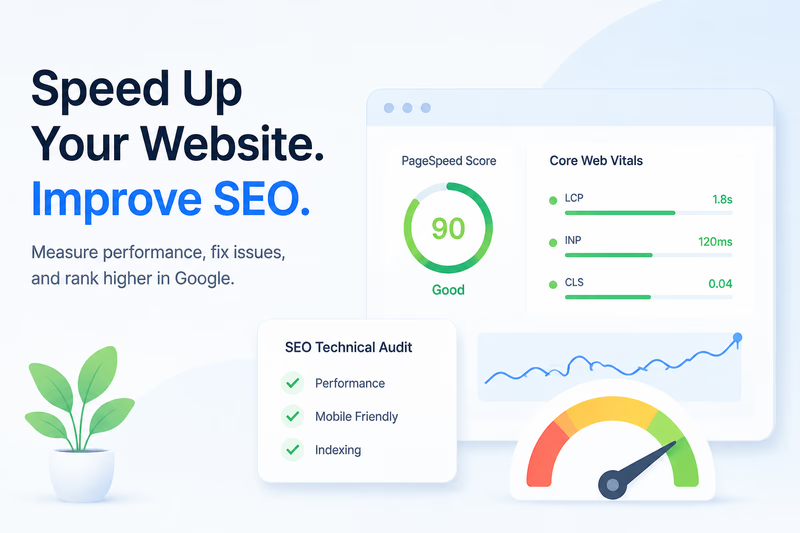
A website can feel fast and still fail SEO. The homepage loads quickly and everything seems responsive, yet rankings slip because the pages you don’t check, mostly deep product and mobile templates, are quietly failing Core Web Vitals. Perceived speed on your own device isn’t the same as the performance Google measures across real users, especially mobile performance on slower networks, and that gap is where SEO quietly erodes.
A lot of websites look perfectly fine on the surface. The homepage loads quickly. Pages seem responsive enough. Nobody inside the company notices major problems day to day. Then traffic slowly starts declining. Not dramatically, just enough for the SEO team to feel something is off. That’s usually when companies finally run a proper page speed test or a deeper technical SEO audit, and that’s when the hidden problems appear: mobile pages loading far slower than desktop, product pages failing Core Web Vitals, large JavaScript bundles blocking rendering, layout shifts damaging user experience, and tracking scripts quietly slowing interaction.
The frustrating part is that many of these issues build up gradually. Nobody notices them right away because websites rarely break overnight. They slowly get heavier after releases, plugins, redesigns, analytics tools, and frontend updates.
Why traditional SEO checks often miss real problems
Most companies still approach SEO in a limited way. They check a few pages manually, run Lighthouse once before deployment, maybe review some basic PageSpeed Insights recommendations, and assume the site is healthy. But modern websites are far more complicated than they were a few years ago. An ecommerce site can generate thousands of unique page states through filters, pagination, localization, dynamic search pages, and campaign URLs. Checking only a handful of pages no longer reflects the actual technical condition of the site.
This is especially dangerous because performance problems rarely affect every page equally. A homepage may score 92 while deeper product pages quietly sit below acceptable thresholds for weeks. That is why more SEO teams are shifting toward continuous monitoring instead of occasional one-time checks.
Why Core Web Vitals matter more than ever
Google has spent years emphasizing Core Web Vitals metrics like:
- Largest Contentful Paint (LCP)
- Cumulative Layout Shift (CLS)
- Interaction to Next Paint (INP)
At first many businesses treated these like another temporary SEO trend. Today they’re part of the foundation of technical website quality. Core Web Vitals directly affect user experience, mobile usability, rendering stability, and overall responsiveness. More importantly, they reveal problems users already feel before they complain. A site may technically work, but if interaction feels sluggish or layouts jump while loading, visitors notice. Google notices too. This is why Google Search Console Core Web Vitals reporting has become increasingly important for SEO teams. It helps identify patterns that are impossible to catch manually across large websites.
Why technical SEO is becoming continuous work
One of the biggest misconceptions about technical SEO is that you fix issues once and move on. In reality, modern websites constantly evolve. Every release changes something:
- frontend components
- tracking scripts
- third-party integrations
- rendering behavior
- personalization systems
- analytics tools
Over time, sites naturally accumulate technical complexity, and without ongoing monitoring, performance slowly degrades release after release. That is why more teams now combine recurring page speed tests with automated Lighthouse monitoring and regular technical SEO audits, not because they expect disaster every week, but because small regressions are easier to fix early than after months of accumulated technical debt.
Why SEO teams need better visibility
Modern SEO is no longer just about metadata and keywords. It increasingly overlaps with frontend performance, user experience, rendering behavior, and infrastructure stability. The teams performing best long term usually aren’t the ones reacting fastest after rankings drop. They’re the ones finding technical issues before users and search engines fully feel the impact. That takes visibility, not just into one page, but into the entire website.
What “feels fast” really hides
Most websites don’t suddenly collapse because of one catastrophic mistake. They slowly degrade through hundreds of small technical decisions that seem harmless individually. A plugin here. A tracking script there. A release nobody deeply tested on mobile. Over time the site gets slower, less stable, and harder for both users and search engines to process. That is why continuous technical monitoring is becoming one of the most important parts of modern SEO, because by the time rankings visibly decline, the underlying performance issues have often existed much longer.