
Why Websites Often Pass QA but Still Fail Core Web Vitals
A website can pass QA testing, Lighthouse audits, and still fail Core Web Vitals after release. Most performance problems appear gradually through scripts, frontend updates, and third-party tools that quietly slow down the website over time.
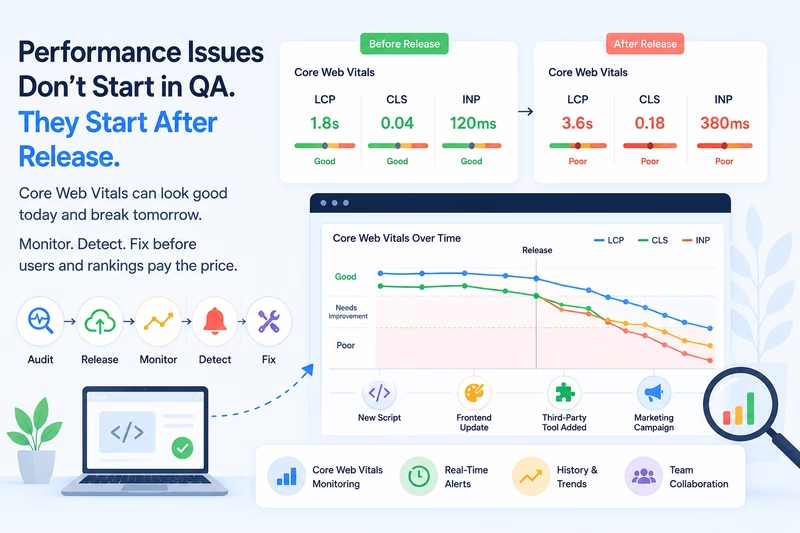
A website can pass QA testing, clear a Lighthouse audit, and still fail Core Web Vitals a week after release. It happens because QA checks one build in a controlled environment, while Core Web Vitals measure real users on live pages that keep changing. Most performance damage doesn’t break anything, so it slips through QA and surfaces post-release as slow mobile pages, laggy filters, and shifting layouts.
This happens more often than most companies realize. Developers test the staging environment. Designers approve the layouts. Marketing checks tracking. SEO runs a quick Lighthouse audit on a few important pages. Everything seems ready. Then the release goes live, and a week later mobile pages feel noticeably slower, product filters get laggy, layouts shift during loading, and Search Console starts showing Core Web Vitals issues across large groups of URLs. Nobody understands what happened because technically nothing broke. The site still works. Performance just quietly degraded underneath the surface.
Why Chrome audits don’t show the full picture
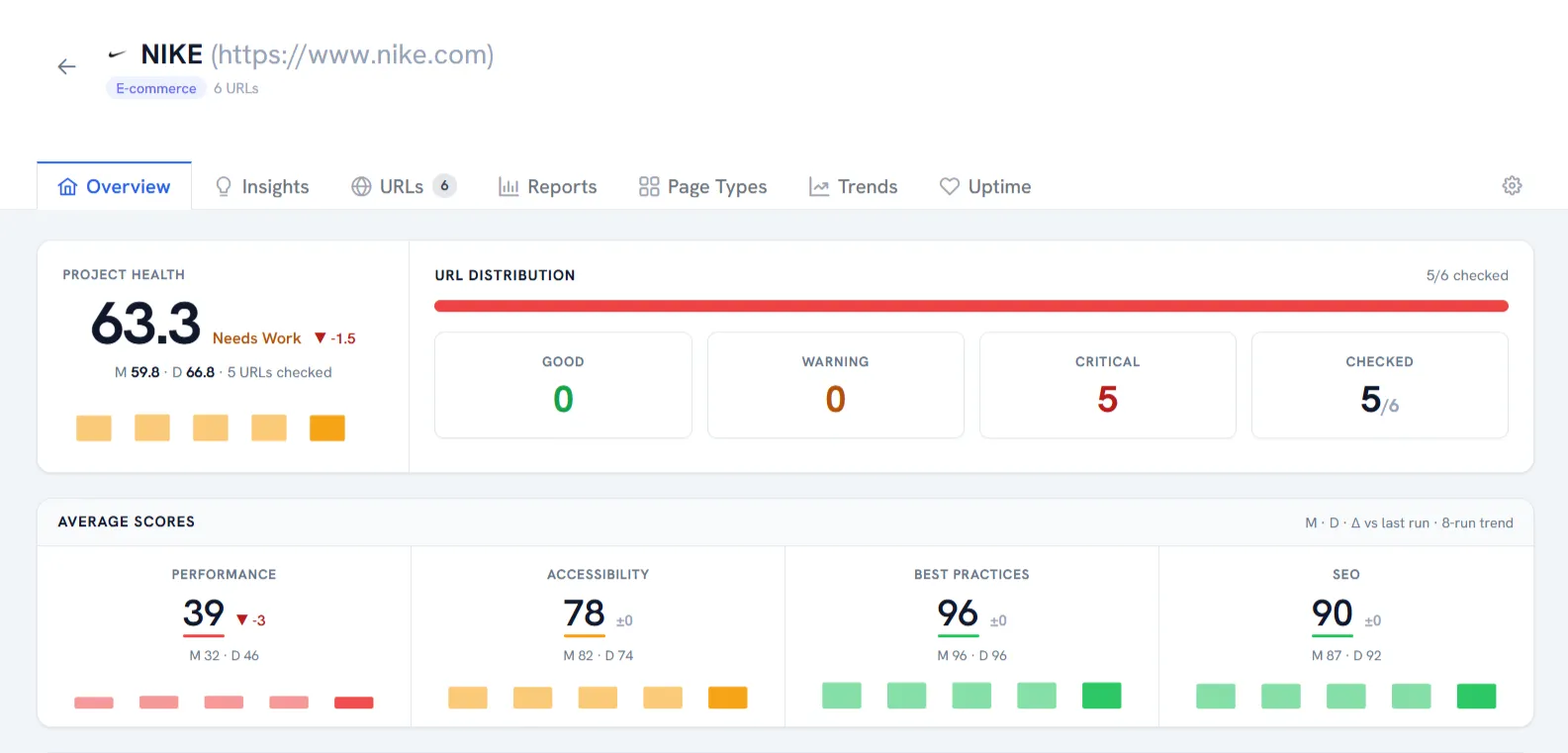
A lot of teams lean too heavily on isolated Chrome audit checks. The problem is that a single audit captures one page state at one moment. Modern websites are far more dynamic than that. An ecommerce site may contain thousands of combinations created by filters, search pages, campaign parameters, localization, personalization systems, and third-party integrations. A homepage can perform perfectly while deeper templates quietly struggle with rendering issues, interaction delays, and unstable layouts. That is why experienced SEO teams no longer treat Lighthouse or Chrome audit results as a final answer. They use them as part of a much larger monitoring process.
Why Core Web Vitals problems usually appear after releases
Most performance problems are introduced gradually. A tracking script gets added. A frontend component gets heavier. A personalization tool injects extra JavaScript. A marketing platform slows rendering. Individually these rarely look catastrophic, but together they slowly damage:
- LCP
- CLS
- INP
- Lighthouse performance scores
- mobile responsiveness
- overall user experience
This is exactly why many sites pass QA testing but fail real-world Core Web Vitals after deployment. And by the time teams notice manually, rankings and conversion rates may already be affected.
Why one Web Vitals test is not enough
A lot of businesses still rely on occasional web vitals test tools before releases. They run a free Core Web Vitals test, save a screenshot with green metrics, and assume the site is healthy. The problem is that performance is never static. Every release changes something. Websites continuously evolve through:
- frontend updates
- analytics scripts
- tracking systems
- third-party integrations
- A/B testing tools
- dynamic rendering changes
Without continuous visibility, sites slowly get heavier and less stable. That is why modern SEO teams increasingly test Core Web Vitals on recurring schedules instead of relying only on isolated audits.
Why Core Web Vitals monitoring matters for SEO
Today technical SEO is deeply tied to user experience. Google increasingly evaluates how sites actually behave for real users, especially on mobile, which is why Core Web Vitals monitoring has become an important part of long-term SEO strategy. Modern SEO teams increasingly need to:
- check Core Web Vitals across large groups of pages
- compare mobile and desktop performance
- detect regressions after releases
- identify unstable templates early
- monitor performance trends over time
- investigate Lighthouse score changes continuously
Without that visibility, companies often discover technical SEO problems only after rankings visibly decline.
Why performance monitoring is becoming continuous work
One of the biggest misconceptions about website optimization is that performance can simply be finished. In reality, websites constantly accumulate technical complexity, and the larger the site gets, the harder it is to track manually how every release affects performance. This is especially true for ecommerce sites where hundreds or thousands of pages share the same templates and frontend systems, so a small regression can spread across the whole site fast. That is why more companies are moving toward continuous Core Web Vitals monitoring instead of relying only on occasional Lighthouse checks, because finding performance problems early is much easier than explaining traffic drops several months later.