
Why Lighthouse Scores Look Good While Rankings Still Drop
A website can show excellent Lighthouse scores while rankings quietly continue dropping underneath the surface. On large ecommerce platforms, static SEO reports often fail to capture how releases, scripts, and frontend changes gradually affect real user experience across hundreds of pages.
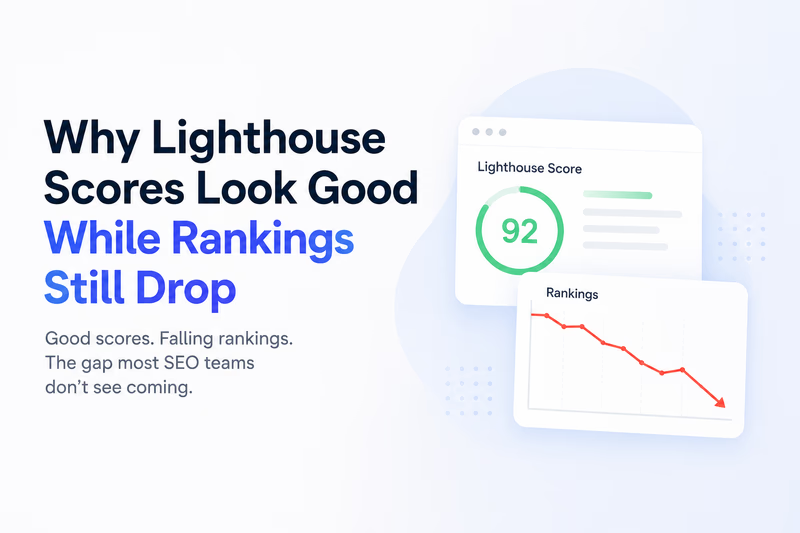
A website can post excellent Lighthouse scores while rankings quietly keep dropping. On large ecommerce platforms the reason is almost always the same: a Lighthouse score reflects one page at one moment, while rankings depend on how hundreds of templates behave for real users over time. The report looks healthy because it never looked at the pages that are actually degrading, which is what makes a raw Lighthouse score vs real rankings so misleading.
The problem with “healthy” SEO reports
One of the most frustrating situations for SEO agencies is watching rankings decline while technical reports still look healthy on the surface. The homepage scores above 90 in a chrome Lighthouse report, the latest SEO analyzer report shows no critical failures, and the client recently received positive SEO reports for customers saying performance looked stable. From a reporting perspective, everything seems under control. From a business perspective, traffic is quietly moving the wrong way.
This is far more common on large ecommerce sites than many teams realize. A big reason is that Lighthouse audits get treated as a complete picture of the website, even though they usually reflect only one page at one moment. A homepage can perform perfectly while deeper templates slowly become unstable as frontend releases, tracking integrations, merchandising experiments, and personalization updates start interacting.
Why large ecommerce websites behave differently
Large ecommerce platforms rarely fail because of one catastrophic mistake. More often, rankings decline because dozens of smaller operational changes slowly affect rendering across product pages, filtered categories, internal search templates, and mobile experiences. A recommendation engine slightly increases JavaScript execution time. A marketing integration delays rendering on mobile. A frontend release changes how certain templates load dynamic content. Individually these look harmless, but together they can create serious performance inconsistencies across hundreds or thousands of URLs.
This is where ecommerce sites differ from smaller marketing sites. Problems don’t usually appear everywhere at once. One template stays stable while another quietly gets heavier after several unrelated releases.
Why SEO reports often fail to explain ranking drops
This is where client communication gets hard. A lighthouse SEO report may still look relatively healthy while real users already deal with unstable layouts, slower interaction, and inconsistent mobile performance on important commercial pages. The client naturally asks why rankings are dropping if the reports look positive, and most static reporting workflows aren’t designed to answer that clearly.
A traditional SEO website analysis report or site audit report free tool is useful for spotting obvious technical issues, especially during migrations or large cleanups. The problem is that ecommerce sites evolve much faster than reporting cycles. By the time the next monthly report arrives, several releases may have already affected product page performance, Core Web Vitals stability, or rendering across important templates.
Why agencies lose visibility after releases
This gets even harder for agencies managing multiple ecommerce clients at once. Different teams inside the client organization keep changing the platform without always understanding how those changes affect SEO. Marketing adds tracking systems, developers push frontend updates, merchandising teams launch experiments, and third-party integrations quietly expand. Eventually the agency is looking at a search console report full of unstable URLs and declining mobile metrics, without enough historical visibility to confidently say when the regression started.
That’s one of the biggest limitations of static SEO software reporting. Most tools are very good at generating snapshots. Far fewer help teams understand how website behavior changes over time. A seo keyword ranking tool free platform may show that rankings moved, but it usually can’t explain which deployment, integration, or rendering issue caused the decline.
Why product pages usually reveal the real problems
On large ecommerce sites, the gap between reporting and reality is clearest on product pages. These templates often carry the highest concentration of third-party systems anywhere on the platform: reviews, recommendation widgets, personalization engines, analytics tools, dynamic pricing, inventory integrations, tracking scripts, and marketing tags all competing for browser resources at once. The homepage may keep passing Lighthouse checks while deeper templates quietly get heavier after every release. This is why many agencies eventually realize isolated audits aren’t enough for large ecommerce platforms. A few healthy Lighthouse scores rarely explain what users experience across the rest of the site.
Why continuous visibility matters more than static reports
Modern SEO teams increasingly combine Lighthouse monitoring, template-level analysis, Search Console reporting, and ongoing Core Web Vitals tracking to understand how performance evolves after releases, rather than just generating another SEO report for free at month-end. The agencies doing best on large ecommerce accounts usually aren’t the ones producing the most visually impressive reports. They are the ones keeping enough historical visibility to explain when rankings started changing, which templates became unstable, and how technical regressions spread through the website over time. That operational visibility is becoming far more valuable than static reporting alone.
What good scores can’t guarantee
Lighthouse scores still matter, and technical audits are still useful. But on modern ecommerce platforms, good scores on a few isolated pages no longer guarantee stable rankings or a healthy experience across the whole site. Frontend releases, third-party scripts, personalization systems, and rendering changes continuously affect how large websites behave underneath the surface. Without ongoing monitoring, many of those problems stay invisible until rankings, conversions, or customer experience are already hit.